Licensed gardeners Bankside proof of insurance and safety
If you are comparing gardeners in Bankside, proof of insurance and safety should be near the top of your list, not an afterthought. A tidy border is lovely; a gardener who turns up properly insured, risk-aware, and organised is even better. That is especially true in a busy London setting where paths are narrow, neighbours are close, and one small mistake can become a big headache very quickly.
This guide explains what licensed gardeners Bankside proof of insurance and safety really means in practice, why it matters for homeowners and landlords, how to check it without making a fuss, and what good looks like when a gardening team is genuinely professional. We will also cover common mistakes, a practical checklist, and the sort of questions worth asking before work starts.
To be fair, most people do not need a lecture on paperwork. You want to know: can I trust them near my property, my paving, my plants, and maybe my children or pets? Fair question. Let's break it down clearly.
Table of Contents
- Why proof of insurance and safety matters
- How the process works in practice
- Key benefits and practical advantages
- Who this is for and when it makes sense
- Step-by-step guidance
- Expert tips for better results
- Common mistakes to avoid
- Tools, resources and recommendations
- Law, compliance, standards and best practice
- Options, methods, or comparison table
- Case study or real-world example
- Practical checklist
- Conclusion
- Frequently asked questions
Why Licensed gardeners Bankside proof of insurance and safety Matters
Insurance and safety are the two things you hope you never need to think about. Then, the moment a ladder slips on wet paving or a stone chip flies during hedge trimming, they suddenly matter a lot. A properly insured gardener is there to protect you from awkward surprises as well as real financial exposure. Safety procedures do the same thing, just before anything goes wrong.
In Bankside, where gardens often sit beside terraces, basements, walkways, or shared access areas, the risks can be more layered than people expect. A mower can damage a decorative border. A strimmer can strike a window. Even something as ordinary as carrying soil bags through a narrow side return can create a slip hazard if the team is careless. Good gardeners manage those risks; careless ones pretend they do not exist.
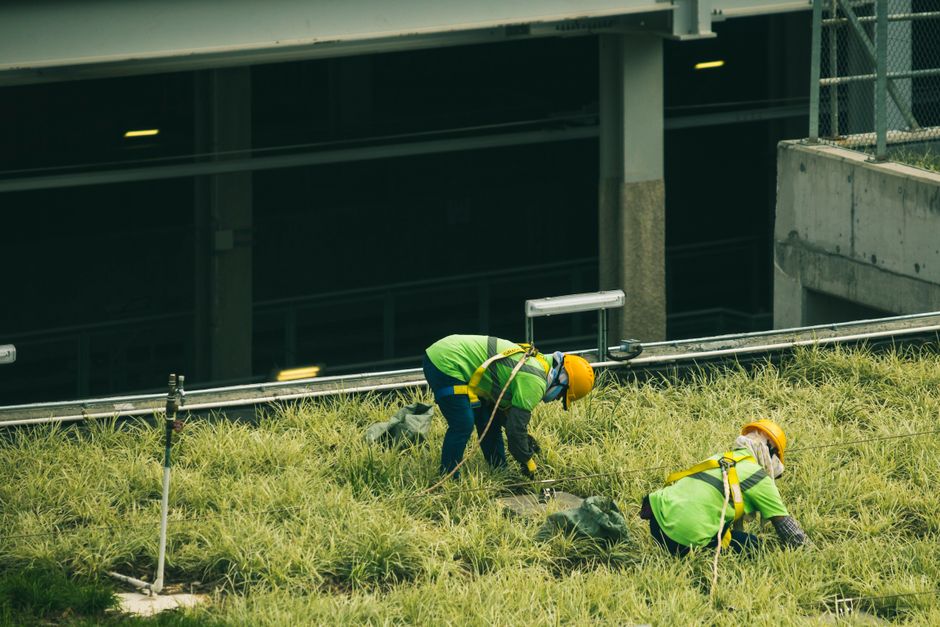
Proof of insurance is not just a piece of paper. It is evidence that the gardener understands accountability. Proof of safety is broader: method statements, safe working habits, correct PPE, sensible lifting, and a visible habit of thinking ahead. That combination is what separates a professional service from someone who just owns a van and a rake.
If you are planning wider work, such as garden maintenance or more detailed gardening services, this becomes even more important because the team may be on-site regularly and handling a wider range of tasks over time.
Expert summary: good insurance protects your property and finances; good safety practice protects people, plants, pets, and the work itself. You really want both, not one or the other.
How Licensed gardeners Bankside proof of insurance and safety Works
In simple terms, the process should work like this: a gardener or gardening company quotes for the job, explains how the work will be carried out safely, and can provide evidence of appropriate insurance if asked. In a tidy professional setup, that evidence is easy to provide, not something they need to "find later" after a bit of awkward silence.
The insurance side usually covers the practical realities of working in gardens and outdoor spaces. Public liability insurance is the most commonly discussed policy because it is intended to cover accidental damage or injury connected to the work. Depending on the business structure and services offered, there may also be employer-related cover and other policies. The exact mix can vary, so the important thing is not to guess. Ask what applies to your job.
The safety side is about process. Before work begins, a sensible gardener will look at access routes, trip hazards, fragile surfaces, pets, children, overhead obstacles, and the specific equipment needed. If the job includes something more specialised, such as tree work or heavy-duty clearance, the checks should be even more careful. A team that also offers tree surgery should be ready to discuss working at height, exclusion zones, and debris control in plain language.
Good teams do not overcomplicate this. They simply build safety into the job from the start. That usually includes:
- a quick site look before work begins;
- clear agreement on what is being done and what is not;
- appropriate tools and protective equipment;
- safe disposal or storage of waste;
- careful attention around paving, decking, windows, and boundaries;
- and a tidy handover at the end.
For services like lawn mowing or lawn care, the process can look straightforward, but the same standards still apply. A professional still checks for toys, stones, hidden branches, irrigation heads, and anything else that could become a problem under rotating blades.
Key Benefits and Practical Advantages
The obvious benefit is peace of mind. You are not left wondering who pays if something goes wrong, or whether the person in your garden is taking sensible precautions. But there are more practical advantages too.
1. Better protection for your property
Professional cover matters when work is being done near windows, fencing, patios, sheds, and delicate planting. If you have recently invested in patio cleaning or are planning decking services, you will know how easy it is for a small oversight to spoil a good result. Insurance does not stop mistakes, but it helps manage the consequences.
2. Safer working conditions for everyone
A safety-minded gardener reduces the likelihood of slips, trips, strains, and accidental damage. That means fewer interruptions and less worry for you, your family, and the gardeners themselves. It also tends to show up in the quality of the finished job. Careful people usually do careful work.
3. More reliable service
In practice, teams with stronger safety routines are often better organised overall. They turn up prepared, use the right tools, and finish without leaving you with a trail of mess or mystery puddles. Handy, that.
4. Easier decision-making for landlords and property managers
If you manage multiple outdoor spaces, proof of insurance is not just sensible. It is part of due diligence. You need to know who is entering the site, whether they are insured, and whether they can work with minimal disruption. This is especially relevant where access is shared or tenants have pets.
5. Better support for specialist projects
Jobs such as landscaping or fencing often involve tools, lifting, and physical changes to the space. A good safety process keeps the work controlled rather than chaotic.
| What you check | What a good gardener should be able to show | Why it matters |
|---|---|---|
| Insurance | Evidence of suitable cover for the type of work | Protects against accidental damage or injury claims |
| Safety process | Clear working method and site awareness | Reduces risk around people, property, and tools |
| Experience | Relevant services and practical knowledge | Supports better judgment on site |
| Communication | Simple answers, no dodging | Builds trust before any work begins |
Who This Is For and When It Makes Sense
Honestly, this matters to almost anyone hiring a gardener in Bankside. But it is especially relevant if any of the following apply:
- you have a valuable or recently improved garden;
- your property has hard surfaces, steps, or narrow access;
- you are hiring someone for regular maintenance rather than a one-off tidy-up;
- children, pets, or elderly relatives use the space;
- the job includes ladders, cutting tools, hedge work, or tree-related tasks;
- you are a landlord, leaseholder, or property manager;
- you want the reassurance of a documented, professional approach.
It also makes sense when you are booking seasonal work. For example, if you are preparing for colder weather, checking the approach to your garden in advance is smart. A job that looks simple in July can become much trickier in November. For that reason, people often pair safety-conscious hiring with planning pieces like winterising the garden or more general low-maintenance garden tips.
And if your garden is tight on space, a gardener who understands safe access and tidy working methods will usually be a better fit than someone who just promises to "get it done quick." Quick is great until the plant pot is cracked and the gate is sticking. Nobody needs that.
Step-by-Step Guidance
Here is a practical way to check proof of insurance and safety without making the conversation feel formal or awkward.
- Ask early. Do not wait until work starts. Bring it up when you request a quote.
- Ask what type of insurance is in place. Keep it general and relevant to the job. A professional will answer clearly.
- Confirm the services covered. A gardener who trims hedges may not be the same risk profile as a team handling larger landscaping work.
- Look for signs of safety planning. That includes tidy equipment, sensible clothing, and an interest in your site layout.
- Discuss access and hazards. Mention pets, children, fragile paving, water features, and shared paths.
- Check how waste and debris are handled. This is often where a careless job becomes a messy one.
- Agree the scope in writing. A short written summary is usually enough for straightforward jobs.
- Review the finished work. Check surfaces, borders, gates, and any areas where tools were used.
If you are getting a quote, it helps to use a page like pricing and quotes to understand what should be included before you commit. That way, the conversation stays focused on value and safety, not guesswork.
For anyone unsure where to begin, the simplest move is to contact the team and ask direct questions. No drama, no interrogation. Just sensible diligence. You can start through the contact page.
Expert Tips for Better Results
Over the years, one thing stands out: the best gardening jobs are rarely the flashiest. They are the ones where planning, access, and communication were quietly handled before the first cut was made.
Be specific about the garden layout
Mention slopes, loose gravel, narrow side returns, overhead wires, drainage covers, and anything that might not be obvious at first glance. A three-minute conversation can prevent a one-hour problem. Simple as that.
Ask for practical examples, not jargon
If a gardener starts explaining safety in language that sounds copied from a manual, bring it back to real life. Ask, "How would you manage this particular space?" The answer should be calm and concrete.
Prioritise tidy working habits
A neat site usually means safer work. Tools placed sensibly, waste collected properly, and pathways left clear all matter more than people think. There is nothing glamorous about stepping on a hidden rake handle.
Think about the season
Wet paving, early dusk, frost, fallen leaves, and windy conditions all change the risk profile. If your garden is exposed, it is worth reading about coping with powerful wind and preventing weather damage. Those conditions matter for safety as well as plant health.
Choose gardeners who respect your space
It sounds obvious, but it is not always obvious in practice. A respectful gardener notices the little things: a child's bike by the path, a cat that keeps circling the shed, a wet patch near the gate. That awareness is part of safety, even if nobody writes it on a certificate.
Common Mistakes to Avoid
Some mistakes are minor. Others are the kind that make you mutter, "I should have checked that earlier." Here are the big ones.
- Assuming insurance is automatic. Do not assume. Ask.
- Choosing purely on price. Cheap can become expensive if something gets damaged.
- Skipping the site walk-through. That is where hazards are identified.
- Not mentioning pets or children. Very easy to forget, very important to say.
- Leaving scope vague. "General tidy-up" can mean very different things to different people.
- Ignoring access issues. Narrow gates, locked communal areas, and storage spaces all affect safety.
- Failing to check after the job. A quick review at the end helps catch issues early.
Another subtle mistake is thinking safety only matters for large projects. Not true. Even a small hedge trim can involve ladders, clippings, and falling debris. If you want hedge work done carefully, a relevant page like hedge trimming in Bankside may be useful context when you are deciding what kind of service to book.
Tools, Resources and Recommendations
You do not need to become a safety expert to hire responsibly. But a few simple things make the process easier.
- A written quote. Helps define the task and reduces misunderstandings.
- A note of access instructions. Gate codes, shared entrances, parking quirks, all of it.
- A quick list of sensitivities. Pet areas, fragile beds, newly seeded patches, irrigation heads.
- A questions list. Keep it short and practical: insurance, safety approach, waste removal, timing.
- Relevant service pages. If your garden needs multiple tasks, reviewing garden maintenance, lawn care, or lawn mowing can help you frame the work clearly.
For garden design questions that affect movement and visibility, useful reading can also include ideas for a child-friendly garden and crafting a safe garden setting. These are not just decorative ideas; they influence how safely a space can be maintained day to day.
Law, Compliance, Standards and Best Practice
This is the bit where a bit of caution helps. If you are hiring a gardener in the UK, there are general legal and practical duties around working safely, protecting people, and not causing avoidable damage. The exact responsibilities depend on the type of work, who is carrying it out, and the site conditions. It is not a one-size-fits-all checklist.
From a best-practice perspective, a professional gardening service should be able to explain how it manages risk, how it uses equipment safely, and what it does if an incident occurs. For more involved work, especially where trees, heights, or structural changes are involved, the level of care should be higher. If a company has a documented health and safety policy, that is a positive sign because it shows the business has thought beyond the day's immediate task.
Other useful trust signals include clear terms and conditions, transparent payment and security information, and a straightforward complaints procedure. None of these replace proper on-site safety, of course, but they do show a more mature, accountable operation.
There is also a wider ethical side. Businesses that publish a modern slavery statement and maintain accessible, user-focused policies such as an accessibility statement, privacy policy, and cookie policy are often signalling a more serious, organised approach. Not every customer reads those pages, granted. But they do tell you something about how the business thinks.
Options, Methods, or Comparison Table
When people hire gardeners, they usually fall into one of three broad approaches. Each can work; the question is which one suits your level of risk tolerance and the size of the job.
| Option | Best for | Pros | Watch out for |
|---|---|---|---|
| Informal help | Very small, low-risk tasks | Often quick and flexible | May lack proper insurance or consistent safety habits |
| Independent professional gardener | Regular domestic garden care | Usually more personal and responsive | Insurance and scope should still be checked carefully |
| Established gardening company | Complex, repeated, or multi-service work | Often better documentation, systems, and backup | May cost more, though not always dramatically |
For more technical or multi-area projects, a broader service can make sense. For example, a site that needs landscaping, fencing, and regular upkeep is often better handled by a team with stronger documentation and a clearer workflow. On the other hand, if you only need seasonal tidying, a reliable independent gardener may be perfect.
Case Study or Real-World Example
Here is a realistic scenario from the kind of work people ask about all the time. A Bankside homeowner has a small courtyard with stone paving, raised planters, and a narrow rear access path. They want a tidy-up, hedge shaping, and lawn repair work in a pocket of synthetic turf and border planting.
The first gardener gives a quick price but says little about safety. The second asks about access, checks whether pets use the space, explains how cuttings will be removed, and confirms that they hold suitable insurance for the work. They also notice a loose paving slab near the path and flag it before any equipment is brought through. That is the sort of detail that matters in real life. Not flashy, just competent.
By the end of the visit, the space looks better, the paths are clean, and the homeowner feels calm rather than slightly uneasy. Nothing dramatic happened, which is exactly the point. Good safety is often invisible because it prevents the drama before it starts.
That same mindset helps with specialist jobs too. If a garden needs pruning, edging, or seasonal clearing, a careful team working from a sensible plan will usually produce a better finish than someone improvising as they go. Truth be told, gardens tend to reward steady hands.
Practical Checklist
Use this before you hire, or even before the first visit.
- Have I asked for proof of suitable insurance?
- Do I understand what work is included?
- Have I mentioned pets, children, or vulnerable areas?
- Has the gardener asked about access and site hazards?
- Is there a clear plan for tools, waste, and clean-up?
- Do I know who to speak to if something goes wrong?
- Are the terms, pricing, and payment expectations clear?
- Does the team seem calm, organised, and practical?
- Have I checked that any specialist work is within their scope?
- Do I feel comfortable letting them work without hovering the whole time?
If you can tick most of those boxes, you are in good shape. If not, pause and ask a few more questions. That is not being fussy. That is being sensible.
Conclusion
Hiring licensed gardeners Bankside proof of insurance and safety is really about protecting the whole experience: your property, your peace of mind, and the quality of the work. Good gardeners do not just mow, trim, or clear. They plan, they communicate, and they respect the space they are working in.
When you ask for insurance details and safety reassurance, you are not being difficult. You are behaving like a careful homeowner, landlord, or property manager. And that pays off. Usually in fewer surprises, cleaner results, and far less stress. Which, let's face it, is worth a lot on its own.
If you are comparing options now, take a moment to review the service pages, ask the right questions, and choose the team that feels steady rather than hurried. The right gardener will not mind at all. In fact, they will probably welcome it.
Get a free quote today and see how much you can save.
And if the first conversation feels reassuring, that is often a very good sign. Sometimes the best projects begin with a simple, honest answer.
Frequently Asked Questions
What does proof of insurance mean when hiring a gardener in Bankside?
It means the gardener can show evidence that they have suitable cover for the work they are doing. In plain English, it is a way of checking that accidental damage or injury risk has been considered.
Why is safety so important for garden work?
Because gardens contain more hazards than people often realise: slippery paving, sharp tools, uneven ground, pets, children, glass, steps, and awkward access. Safety prevents small jobs turning into expensive problems.
Should I ask for insurance before the gardener starts?
Yes. Ask during the quote stage. That way, you know where you stand before anyone arrives with tools and starts moving things around.
Is public liability insurance enough?
It depends on the work. It is commonly relevant, but the right cover varies by service, job size, and how the business operates. Ask what applies to your specific project rather than assuming.
How do I know if a gardener is taking safety seriously?
Look for practical signs: tidy equipment, clear communication, awareness of access issues, questions about pets or children, and a sensible plan for waste and clean-up. The details matter.
Do I need proof of insurance for a one-off garden tidy-up?
Even for one-off work, it is still wise to ask. A small job can still involve damage risk, particularly if the garden has delicate surfaces, tight access, or valuable features.
What if the gardener cannot show insurance documents?
That is a warning sign. You do not need to be rude, just cautious. If they cannot provide reassurance, it is reasonable to look elsewhere.
Does safety matter for lawn mowing and routine maintenance?
Absolutely. Regular jobs still involve blades, debris, wet grass, trip hazards, and property edges. Routine work can be deceptively risky if it is done carelessly.
What questions should I ask before booking?
Ask what insurance they carry, how they manage site safety, what the quote includes, how waste is handled, and whether they have experience with the type of work you need.
Are gardeners who offer landscaping or tree work expected to have extra care procedures?
Yes, generally. Bigger or more technical jobs usually demand more planning, better equipment control, and closer attention to risk. That is normal and sensible.
Can I ask about a health and safety policy without sounding awkward?
Definitely. A professional will not mind. It is a normal part of hiring someone to work on your property, especially where tools, height, or access issues are involved.
Where should I go next if I want to speak to the team?
The simplest next step is to use the contact page and ask for a quote along with the insurance and safety information you want to see.